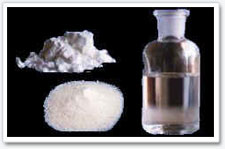
Cocaine is a global business. From coca farmers in Columbia, to trafficking cartels in Mexico, to crack slingers in Miami, to cocaine dealers in London, the supply chain of cocaine stretches around our world. For some cocaine is a way of life. Producers, traffickers, dealers, users, scientists, and cops are all part of this 300 billion dollar global industry.
Crack Powder
Cocaine, a powerful stimulant that produces feelings of intense pleasure and wellbeing, is used in two main forms. Cocaine powder, snorted predominantly by middle class and up. Many of whom would believe that it's non-addictive and can enhance both work and play. Crack cocaine is sold in rock crystal form that can be heated and inhaled or smoked. It is called 'crack' in reference to the cracking sound it makes when it is heated. It appeals to a lower class cohort due to it's price and availability and it delivers an intense high. However, smoking crack follows the laws of diminishing returns, the euphoria delivered by the first hit from a crack pipe is always the greatest. Users continue to smoke in an attempt to recapture the impact of that first hit.
The United Nations World Drug Report declares that there are up to 20 million cocaine users worldwide, with the majority snorting cocaine. Crack cocaine first emerged in 1984. Up until then, cocaine costing $100 per gram was seen as a drug that was the preserve of the rich. Crack revolutionised the cocaine business by offering a cheap, yet intensely powerful high for as little as $5. It soon swept through America's inner cities. Within a year, 5.5 million people had succumbed to this new addiction.
Cocaine has long been seen as
synonymous with a glamorous lifestyle
On the other side of the Atlantic in the U.K., crack cocaine has never really become as popular. The British population lean towards powdered form and use more than any other nation in Europe (EU Drug Agency Report). In the 1990's the appetite for cocaine in the U.K. exploded. Seen as a glamorous drug that enabled users to work and play harder and longer, cocaine became the drug of choice for Britain's middle class. Today, an estimated 38 tonnes of cocaine is being consumed in the U.K. each year.
Around the world there are an estimated two million people working as cocaine dealers. Selling cocaine in crack form can provide a good living but few make a fortune. The big fish are the traffickers who supply the dealers with the 900 tonnes of cocaine produced each year. They earn millions smuggling large shipments across international borders.
Cocaine dealt on the streets of London comes from the other side of the globe. From Columbia, cartels ship their product to depots they've built in Guinea Bissau, West Africa. The cocaine is then trucked to Morocco and into Spain, where it is sold to British traffickers who load it on trucks that are sent to the U.K. by ferry. Out of ten trucks, two are usually expected to be caught.
The cocaine trade wreaks havoc on countries around the world. Cash from the sale of coke has financed coups in Bolivia, fuelled guerrilla wars in Nicaragua and Columbia, and threatens the stability of the Mexican state today.
Every year 51 billion dollars worth of cocaine floods across the border into the United States. Mexican cartels purchase cocaine from Columbia where over half of the world's cocaine is produced. The cocaine produced by peasant farmers in Columbia is smuggled across the international borders by traffickers. Sold on city streets by dealers and to be snorted by the 1.9 million regular American users of cocaine. 360,000 of these are hard-core crack addicts. 25% of Americans who have used cocaine in the past year will develop a problem with it. Some will end up in prison and many will seek help for addiction.
Since 9/11, the U.S. department of homeland security reinforced it's border with Mexico by building hundreds of miles of fences and installing license plate readers at all points of entry. It's also increased border patrol units on land, sea, and air.
By the turn of the century, a wave of violence had spread through northern Mexico. The drug cartels fought each other for cocaine trafficking routes into the United States. In 2006 Felipe Calderon was elected president of Mexico. He pledged to take on and defeat the cartels responsible for plunging Mexico's northern cities into anarchy.
Felipe Calderon
Calderon dispatched state police and troops to crack down on the operations of the cartels. When Eduardo Arellano Felix (Tijuana Cartel) was arrested, the leadership vacuum sparked a war for control of the cartels and their drug smuggling routes into the U.S. With many looking to be 'top dog', the war is brutal. In the 3 years following Calderon's election, another 15,000 people are gunned down.
However, the deaths don't deter people from entering into the illegal and violent drug trafficking business. There were hundreds eager to step into Eduardo's shoes and take over his trafficking routes by undermining his position. Up to 2013, the Mexican drug war has cost the lives of 60,000 people, with other reports putting it as high as 100,000 due to missing persons.
For the best part of the last 25 years, governments around the world have been fighting a war against cocaine. In Columbia, the American government has financed an eradication operation to reduce cocaine production in the country by 50%. Since 2000, the U.S government has poured five billion dollars into these eradication missions of cocaine superlabs, all to little effect. The amount of cocaine manufactured in Columbia remains the same today as at the beginning of the century.
No matter how many dealers are arrested, there will always be somebody else eager to take their place. Where there is demand, there will be a supply. Today, more cocaine enters the U.S. than ever before, with an army of dealers selling it to America's 7 million users and addicts. The war is relentless and the vast profits made from cocaine will undoubtedly continue to finance this global drugs business for the foreseeable future.
___________________________________________________________________________________________________________________ ''Cocaine is God's way of saying you're making too much money''. ~ Robin Williams
In 2006 at the Brookhaven National Laboratory, New York, a set of experiments was conducted to discover the true nature of cocaine addiction. Mexican born scientist, Prof Nora Volkow, is one of America's leading specialists on drug addiction. She's on a personal mission to understand the cause of addiction, driven by memories of her alcoholic uncle. ''He was rejected by the system...not even being accepted from the perspective of him having a medical disease''.
Prof. Nora Volkow
What fascinates Prof Volkow is the nature of cocaine addiction. As late as the 1980's, many scientists and politicians believed cocaine was non-addictive, and she wants to prove them wrong.
She took fMRI images of people under the influence of cocaine to try and identify areas of the brain, and the proteins in the brain that get disrupted by use of drugs in people that lose control of their drug intake at the expense of everything else in their life.
Her images showed that cocaine changes the brains structure. ''Repeated exposure produces changes in the way that the brain gets connected, and functions that result in pathological behaviour'', and this is why she argues in favour of it being regarded as a disease.
Trying to understand the nature of this disease, Prof Volkow scanned hundreds of users and ex-users. While scanning the brains of ex-users she noticed an irregularity. When subjects were discussing cocaine their dopamine levels rose. She argues that you could make a case that people become addicted to the lifestyle of cocaine use. Their brains have started to respond to the lifestyle, that is; the environment, their friends, and their situations. Her team later conducted experiments to test the theory.
Subjects were placed in an fMRI scanner and shown images of people preparing and snorting lines of cocaine. Viewing the images resulted in a significant increase of dopamine levels in the brains of the subjects who were current users.
The neurological effect of cocaine
''When we exposed them with stimulants that have been linked with drugs, what we observe is a significant increase in dopamine signalling in those areas of the brain that drive the motivation of drug behaviour''.
Prof Volkow's research showed that cocaine is so addictive that simply showing images of its use is enough to increase a subjects dopamine levels and lead them into a relapse.
Law enforcement treats cocaine users as criminals rather than people suffering from a disease. Over the past ten years, the government in the U.S. has repeatedly slashed funding for drug rehabilitation programmes and increased funding for prisons. The result: a million Americans are imprisoned on drug related charges, costing the American taxpayer 12.5 billion dollars per year.
Prof Volkow believes that the government's approach of criminalising and imprisoning drug use without proper treatment is misguided and statistics support her claims. Cocaine users are likely to relapse after leaving prison and end up re-incarcerated with 40% of cocaine users and 77% of crack convicts being re-offenders. _____________________________________________________________________________________________________________________
Volkow, N.D., Wang, G.J., Telang, F., Fowler, J.S., Logan, J., Childress, A.R., Jayne, M., Ma, Y., Wong, C.J. (2006). Cocaine cues and dopamine in dorsal striatum: mechanism of craving in cocaine addiction. Journal of Neuroscience 14; 26 (24): 6583-8
It is a fact of life that people have always altered their consciousness and future generations will continue to do so. Drugs are here to stay.
Drugs are a 350 billion dollar industry. Research published in the medical journal the Lancet in 2007, rates the following as the most dangerous drugs. The problem with rank ordering drugs by harm is that some of the drugs are used in combination, however, the following is the order of harm in which science sees 20 of the UK's most dangerous drugs. The ratings were based on the following three factors, 1. What the drug does to the person who takes it. 2. How addictive is the drug. 3. What are the consequences to society.
20) Khat (green leafed shrub): makes you feel alert and energised. It is not particularly addictive or harmful but excessive consumption can lead to insomnia, impotence and high blood pressure.
UK deaths per year: 0
Price: £4 a bunch
Alkyl Nitrite
19) Alkyl Nitrite: Legal drug. Street names: Poppers, Liquid Gold.
Delivers a short, sharp high and relaxes sphincter muscles. Sniffed straight from the bottle.
Street Price: £2-6 per bottle UK Users: 400,000 UK Deaths per year: 0 recorded
18) Ecstasy :
MDMA (methylenedioxy-methylamphetamine)
The second half of that word should be a red flag to anyone.
Class A drug.
MDMA
Street Names: E, Love drug, XTC, Hug Drug.
Street Price: £1-8 a pill
UK Users: 500,000
UK Deaths per year: 27
First synthesized in 1912 by Merck chemist Anton Köllisch. it was originally patented to control bleeding from wounds. But in the 1970's it was introduced illegally into the 'dance scene'. Its ranking massively conflicts with its reputation. Hospitals rarely deal with someone presenting with problems with ecstasy. Deaths are usually due to dehydration. It's a stimulant drug and can bring on mild hallucinations. It produces feelings of euphoria, enhanced sociability, empathy & energy and causes increases in body temperature and heart-rate. It affects NMDA Glutamate receptors, and once ingested, it causes the release of the chemical messengers serotonin within the brain which is responsible for regulating mood and memory.
''Most people who take it once, take it again''.
Experts weighing up all the available evidence had little doubt that ecstasy deserved to be no higher than no. 18. All drugs are harmful to a certain extent - even Aspirin, but in terms of the risk to the individual and society, it is nowhere near the other drugs on the list. Thus it seems that it may actually be in the wrong Class.
17) GHB (gamma-Hydroxybutyric acid) : Class C
Street Name: Liquid Ecstasy
Street Price: £5 per dose
UK Users: Not known
UK Deaths per year: 3
As a sedative, a small amount makes you happy, sensual and uninhibited. There are concerns about it being used in 'date-rape', but evidence is quite low, with few cases reporting GHB as being used (because you can smell it, it is not an easy drug to hide). The difference between GHB for 'a buzz' and a dose that can kill you is barely noticeable. When it is mixed with alcohol - it can be fatal.
Anabolic Steroids
16) Anabolic Steroids : Class C drug
Street Price: £20 for 100 tablets
UK Users: 42,000 in England & Wales
UK Deaths: per year: 0
It is used for muscle enhancing. Abuse can cause enormous amounts of damage to the individual - from becoming sterile, high risk of liver failure and even strokes or heart attacks. Further, it can lead to increased aggression and acts of violent behaviour, in what is sometimes termed as 'roid rage'.
Methylphenidate
15) Methylphenidate : Class B
The active ingredient in drugs such as Ritalin.
Street Name: Vitamin R
Street Price: £15 a hit
UK Users: 40,000
UK Deaths per year: 0 recorded
It is an effective treatment for ADHD sufferers. Used by around 40,000 prescription users. When used illegally, the tablets are crushed and snorted for a quick high. It's a powerful stimulant and abuse can lead to vomiting, convulsions, tremors and delirium.
14) LSD (Lysergic acid diethylamide) : Class A
Street Names: Lucy, Trips, Paper Mushrooms
Street Price: £1-5 per tab
UK Users: 83,000
UK Deaths per year: No recently recorded deaths
It used to be a prescription drug. Initially developed as a circulatory and respiratory stimulant in the 1930's. Then in a 15 year period beginning in the 1950's, it was prescribed as a psychiatric treatment to over 40,000 schizophrenic patients worldwide. In the 1960's it was taken up by the army who tested it on their troops to see if it could be used in battle to incapacitate the enemy (see below) . Later that decade, LSD leaked out into the recreational market which panicked the establishment and was made an illegal class A drug.
LSD first acts on the brain's serotonin system, the part of the brain responsible for feelings of well-being. It subsequently acts on the pre-frontal cortex which processes some of our uniquely human abstract thoughts. It also seems to reduce communication between different brain areas, leading to a loss of inhibitions and an ability to open up, and the complex neurological effects can result in powerful hallucinations.
Many experts today believe the dangers of LSD are more faction than fact. It's physiologically non-toxic. No one has ever died of an overdose - true one or two people in the 1960's may have jumped out of windows, but that has become a myth ingrained in history.
13) 4MTA (4-Methylthioamphetamine) : Class A drug.
A man-made drug created to sell purely on the street
as an alternative to ecstasy and is relatively new to the UK.
Street Names: Flat-liner, Golden Eagle.
Street Price: £1-8
UK Users: Unknown
UK Deaths per year: 0 recorded
''33 times more powerful than ecstasy''
It's dangers lie in that even though it is a stimulant, it does not produce the euphoric high that ecstasy does. So users take more of it thinking it hasn't worked which can lead to overdose.
12) Solvents : Legal
From glue, to paint, to aerosols
UK Users: 30,000
UK Deaths per year: 50-60 (including first time users)
A lot more dangerous than people realise. The misuse of solvents is widespread. They can be inhaled so they get into the lungs very quickly. Many have toxic chemicals and can have a very toxic effect on the heart. Somewhere between 5 and 20 children per year die of the heart stopping after solvent inhalation.
Scientists placed a mixture of legal and illegal drugs in the bottom half of the chart. But at number 11 they reached a crucial turning point with the U.K's most commonly used illegal drug.
11) Cannabis:Class B
Street Names: Dope, Hash
Street Price: £40-140 per ounce
UK Users: 3 million
UK Deaths per year: 1
When smoked, it hits the brain almost immediately affecting cannabinoid receptors present everywhere in the brain. Small doses lead to euphoria, relaxation, and pain relief. With high doses it can bring on paranoia and short term memory loss. It can also lead to some form of dependency and more recently linked to lung cancer.
Some scientists have explored long term use and psychosis. The THC in cannabis may be linked to psychotic behaviour. This compound is being used to see if it can recreate similar symptoms in healthy volunteers to those suffered by schizophrenics. Schizophrenia is a psychiatric illness in which patients will experience a range of bizarre phenomenon, such as delusions (e.g. that some agency is out to get them) and with subjects often hearing voices.
''For young people it's catastrophic to include into the diet, psychoactive drugs - their brains are still developing and no where near mature'' ~ Marsden, J.
10) Buprenorphine : Class C opiate
Street Names: Subbies, Temmies
Street Price: £2 a dose
UK Users: Unknown
UK Deaths per year: 2
It is normally used for severe pain and as a treatment for heroin dependency (used as an injectable pain killer and when taken orally it can block the effect of heroin). It is used illegally because of its euphoric and hallucinogenic effects. Without medical guidance, it is highly addictive and being a strong opiate - it can very easily lead to an overdose.
9) Tobacco :
Price: €9+ per pack
UK Users: 10 million+
UK Deaths per year: 114,000
The most deadly drug in the UK. It kills one fifth of the population and reduces life expectancy on average by 10 years. It causes 40% of all hospital illnesses and it is one of the most addictive drugs available - and yet it remains legal.
Smoking alone kills more than drugs, alcohol, HIV, suicide, homicide and car crashes combined. Approximately 1 in 3 lifelong smokers will die from smoking. Probably the most addictive substance there is.
The reinforcing
actions of nicotine are very similar to those of cocaine and amphetamine. However,
the psychopharmacological and behavioural actions of nicotine appear to be much
more subtle than those of cocaine.
Dependence on
nicotine causes a withdrawal syndrome characterized by craving and agitation,
reminiscent of but less severe than that experienced by a stimulant abuser in
withdrawal.
Cigarettes today are so common that they're molded into the fabric of our daily life.
Instead of the
longer and much more intense euphoria of cocaine, the pleasure of nicotine is a
desirable but small boost in the sensation of pleasure ("minirush"),
followed by a slow decline until the nicotinic receptors switch back on and the
smoker takes the next puff or smokes the next cigarette.
8) Amphetamine : Class B
Street Names: Speed, Whizz, Dexies, Billys.
Street Price: £8-12 a wrap.
UK Users: 430,000 UK Deaths per year: 35
As a stimulant, it can make the user feel more energetic and confident. When abused, they can become incredibly addictive. As tolerance builds up - consumption increases, leading to paranoia and depression; and with heavy use bringing on panic attacks and violent mood swings.
7) Benzodiazepine : e.g. Valium
Street Names : Benzos, Downers
Street Prices : £1
UK Users: 100,000
UK Deaths per year: 406
They are minor tranquilisers, used for treating anxiety under prescription along with insomnia and seizures. After a few months they can cause dependence and side effects. When illegally abused, they can lead to memory loss, nausea, anxiety and depression. Consumed with alcohol, they are often fatal.
Withdrawal from Benzos is analogous to the withdrawal of heroin. It should not be taken casually.
6) Ketamine : Class C
Street Names: Special K, Vitamin K
Street Prices: £30+ per gram
UK Users: 100,000
UK Deaths per year: 1 recorded
Normally used as a horse tranquilizer, it has very strong pain killing effects - but has become illegally popular because it is a strong hallucinogen. It looks like cocaine and is snorted similarly. Effects include; numbness, altering reality, and dissociation from your surroundings.
It falls into 6th place on this list because in high doses it results in heart failure and even stopped breathing. It's particularly dangerous if it is mixed with any depressant drugs including alcohol. Prolonged use can lead to psychological dependence and psychosis.
5) Alcohol : Legal
Price: £1+
UK Users: 40 million (2 thirds of UK population)
UK Deaths per year: 40,000
More harmful than ecstasy, LSD, tobacco, 5 Class A's and 11 illegal drugs. Something which kills more people than all of the illegal drugs on this list combined. And which is nevertheless used by the majority of the UK population. Around since the earliest days of civilization, alcohol is the biggest public health problem faced today. There are currently over 180,000 alcohol related hospital admissions each year and deaths have nearly doubled in the past decade. Around 40% of Accident and Emergency admissions are down to alcohol and the cost to the NHS is up to £1.7 billion per year and yet the drinking continues.
Another US study attributed over half of all fatal car accidents, homicides and suicides to occur under the influence of alcohol.
It is the only drug that we actively encourage people to use, which we under-price, sell aggressively and yet we pick up the consequences and damage all the time.
Alcohol is a sedative and it's effects are seen on the brain in five minutes. It affects several neurotransmitters, including GABA and also dopamine, which is found in large quantities in the brains reward pathway. Stimulation of this system not only causes pleasure but also gives alcohol its addictive qualities. Alcohol also acts as a depressant and at low doses removes inhibitions making the person more sociable and talkative. As doses increase, speech begins to slur, it effects coordination, and can bring on nausea and vomiting. Long term use can lead to damage of the heart, liver, and stomach.
If alcohol was invented today, it would certainly have a lot more sanctions on it than it currently has. It probably would be even classified up to an A level.
Alcohol can ruin relationships, jeopardise health, and pretty much put your dreams on hold.
4) Street Methadone : Class A
Street Names: The Precious, Slime, Green.
Street Price: £10 per 100ml
UK Users: 33,000 illegal users
UK Deaths per year: 295
''A drug solution to a drug problem'' ~ Loose, R.
An opiate drug similar to heroin, but ''less addictive''. Prescribed medically, it reduces the withdrawal effects of heroin and tends to lead to a reduction in heroin use. A very small amount for someone who is not used to taking it can be fatal. Because there is no rush like heroin, when you take it you can overdose easily without ever feeling high.
80% of people presenting to methadone clinics in Ireland are already Hepatitis C positive ~ Crown, 2013
3) Barbiturates : Class B
Street Names: Pink Ladies, Red Devils
Street Price: £1-2 per tablet
UK Users: Unknown
UK Deaths per year: 20
It used to be prescribed for depression, anxiety and insomnia. When used illicitly, it can make the user feel relaxed, sociable and good humoured. The problem with barbiturates and the reason they place high on the list - if you take an overdose, you are very likely to die. The small difference between a normal dose and an overdose makes them a highly dangerous drug. If you take an overdose of barbiturates, it'd be like taking an overdose of alcohol - they both work on the same parts of the brain to stop you breathing. They're so dangerous that their medical use has dramatically reduced. Nowadays they are only prescribed to treat very severe insomnia.
2) Cocaine : Class A
Street Names: Charlie, Coke, Base
Street Price: £30+ (Powder) / £10+ (Crack Rock)
UK Users: 780,000 in England and Wales alone
UK Deaths per year: 214 recorded deaths
A stimulant drug often associated with glamour, money, and fame. The two kinds of cocaine: the powder form which is snorted and also the rock form 'crack cocaine', which is a smokeable version. 'Crack' delivers a more intense high but for a shorter period of time. It has a 'mainlining' effect and it goes straight to the brain, where it affects the reuptake of dopamine. The most intense high comes from inhaling the cocaine vapour, either by 'freebasing' (heating cocaine with flammable solvents like ether), or using crack; pre-packaged, rock-like chunks of cocaine freebase.
During the 1980's, the use of crack sky-rocketed. It's cheaper, more readily available and provides a high that too many find irresistible. Unlike heroin and methamphetamine, powder cocaine users neither fall into a stupor nor hallucinate. While cocaine that is snorted reaches the brain in 3 to 4 minutes, smoking cocaine provides the fastest and most intense high. It only takes about 8 seconds for the drug to be absorbed into the brain from the lungs. The result: a euphoric state so intense that patients often describe it in sexual terms.
A subjective
experience that may follow the euphoria is a sense of "crashing," characterized
by craving more cocaine and accompanied by agitation and anxiety, giving way to
fatigue, depression, exhaustion, hypersomnolence, and hyperphagia. After
several days, if another dose of cocaine is not taken, the chronic abuser may experience
other signs of withdrawal, including anergy, decreased interest, anhedonia, and
increased cocaine craving.
1) Heroin : Class A
Street Names: Gear, Smack, Brown, Skag
Street Price: £10-20 a bag
UK Users: 300,000
UK Deaths per year: 700
If your homeless, in and out of prison, no job, numerous problems in your life - then heroin use makes absolute sense. Because it's a pain killer, it wraps people in a bubble where the pain of life can't get to you.
Rated the most harmful drug. Either injected or smoked, heroin is used both as a pain killer and as a recreational drug. It works on the reward pathway, which is why it is intensely habit forming. Withdrawal from cocaine may be more psychological, but with heroin withdrawal is extremely physical.
The thoughts of withdrawal is what poisons the outlook of the opiate addict.
When injected it can produce a fast and strong feeling of euphoria, which is akin to an orgasm. It affects Opioid receptors in the brain. One dose can last from 1 to 3 hours. As it effects the part of the brain that controls breathing, an overdose can be fatal.
''It is a drug that has a very fierce dependence liability, once created, the sense of heroin dependence is very difficult to shift'' ~ Marsden, J.
_____________________________________________________________________________________________________________________ ''Whether you sniff it, smoke it, eat it, or shove it up your ass, the result is the same: addiction'' ~ William S. Burroughs


 Since 9/11, the U.S. department of homeland security reinforced it's border with Mexico by building hundreds of miles of fences and installing license plate readers at all points of entry. It's also increased border patrol units on land, sea, and air.