Showing posts with label Life Expectancy. Show all posts

Saturday, August 08, 2026

One thing you can’t recycle is wasted time

Sometimes life seems really short, and other times it seems impossibly long. But this chart below helps to emphasize that it’s most certainly finite. 

It's based on the Your Life in Weeks post by Tim Urban, from Wait But Why.


Learn to appreciate what you have, before time makes you appreciate what you had. 

Try it out yourself at the following link: Your Life in Weeks - Interactive

These are your weeks and they’re all you’ve got. 

Friday, September 19, 2025

The Two-Headed Calf

- by Laura Gilpin

Published in 1977 in her award-winning poetry book, The Hocus-Pocus of the Universe, this poem invites readers to delve into the profound depths of its verses, grappling with themes of identity, acceptance, animal-rights concerns, and the inevitability of change.

There are so many metaphors and meaning in it.

So simple. So perfect.


Thursday, April 17, 2014

"This is (probably) why you're Fat"


If you just consume fewer calories you'll lose weight. Unfortunately not always.

Most of us think that we only put fat in our fat cells when we eat too much. Your fat cells are like rechargeable fuel cells, every time you eat, you store some fat. In between meals, fat comes out of your fat cells to provide the fuels for your muscles and organs. If you're naturally thin, it's because you have efficient fat cells. Fat goes in quickly and comes out easily. Your body doesn't need much fat because the small bit of fat you do have is a reliable source of fuel. If you're predisposed to be fat, it's because you have 'greedy fat cells'.
 
When you eat you tend to store calories as fat instead of burning them. And when your other tissues need those calories, the fat comes out slowly, if it comes out at all. So if you don't eat, you start to starve at the cellular level. So you do exactly what your body is telling you to do - you eat more. In other words,
 
You're not getting fat because you're eating more,
You're eating more because you're getting fat!
 
 
If your fat cells are slow to release fuel, your body actually works to make them bigger. And they keep on getting bigger until they can release the energy that your body needs. This could mean gaining a little weight or it could mean gaining a lot! It all depends on how slowly your fat-cells release their fat. Most of us aren't born with 'greedy fat-cells', but we can certainly make them that way. When you eat too many carbohydrates, you raise your blood sugar. Since high blood sugar is toxic, your body releases insulin to bring it down. But your body can only burn a little bit of sugar at a time. So what happens to the rest of it? Your storage sites for carbohydrates are limited and you've got unlimited storage places for fat. So the body just ends up converting the carbs in to fat. And after bringing down your blood sugar, your insulin does its other job, it tells your body to store fat.

Insulin stimulates an enzyme called lipoprotein-lipase which sends fat into the fat cells. So if insulin is elevated, this lipoprotein-lipase production is really activated and it sends fat 'like crazy' into the fat cells. So if you eat a lot of carbohydrates, your insulin goes up and you begin storing fat in the fat cells.

Intra-abdominal (visceral) fat is a major culprit for insidious
effects to a person's health including; cardiovascular
disease, type 2 diabetes and high blood pressure.

When you have a healthy metabolism, it only takes a little bit of insulin to bring your blood sugar down and then everything goes back to normal. But over time, that can change. Cells can become resistant to the effects of insulin, so when that happens, insulin is talking with the cells, but they're not listening! They don't do what they're supposed to do. And so your body does what it has to do, it starts producing more insulin. So you've reached a point where your insulin is high just to keep your sugar levels normal, even if your not eating any sugar. When that happens, your insulin is driving fat into the fat cells and you've reached this point where all of a sudden - Bam! You get fat.

And you get fat even though you're eating the same number of calories you always did. Because now you have greedy fat-cells. So you do what the ''experts'' tell you to do, you go on a low fat, low calorie diet so you can burn your own body fat for fuel. But there's just one little problem with this: if too many carbs are keeping your insulin high, the insulin is telling your body to store the fat instead of burning it. Now you're really starving inside!

So once again your body does what it has to do: it slows down your metabolism. You stop losing weight and you get tired. And people can end up being, in most cases, larger than they were when they started out - but now with a lower metabolic rate. And this can be extremely frustrating for many people.


For every pound of fat you put on, you gain 7 new miles of blood vessels!


So some people get fat and stay fat because they're living on foods that tell their body to store the calories in their fat cells - which just makes you hungrier. In some people the fat-cells and the other tissues become insulin resistant at about the same rate. The good news for them is that they don't gain weight, the bad news is that insulin resistance can kill you even if you're skinny.


The demanding of your pancreas that it produce ever greater amounts of insulin to keep your blood sugar normal, is ultimately going to cause 'beta-cell burnout'. So the pancreas is producing all it can produce and that's not enough anymore. When that happens, the beta-cells get damaged, they can't produce anymore and your blood sugar goes up and now you're becoming diabetic. And further, when your blood sugar goes out of control, it can damage your arteries and lead to heart disease.


It's not easy struggling with something that keeps you alive. But you can blame away, you are in charge of yourself. There's no one giant step that does it, it's a lot of little steps. And that doesn't just relate to putting the weight on, but also for getting rid of it. Human nature is very addictive and human nature is very flawed. It is extraordinary that it takes such a long time for the penny to drop with some people. But it shouldn't be a surprise as the seeds of it are really deep. All the problems of being overweight are remedial. But the younger you put it on the bigger you can go. And the further you let yourself go, the longer of a battle it is to get back (O'Shea, 2012).

~ (Fat Head, 2009)
________________________________________________________________________
''I found there was only one way to look thin: hang out with fat people'' ~ Rodney Dangerfield


Monday, February 17, 2014

The Drug that 'Eats Junkies'


*Post contains graphic imagery


Krokodil, or crocodile, is Russia's deadliest designer drug. The average user of krokodil, a dirty cousin of morphine that's spreading like a virus among Russian youth, does not live longer than two or three years, and the few who manage to quit usually come away badly disfigured.
 
The active component is codeine, a widely sold over-the-counter painkiller that is not toxic on its own. But to produce krokodil, whose medical name is desomorphine, addicts mix it with ingredients including gasoline, paint thinner, hydrochloric acid, iodine and red phosphorous, which they scrape from the striking pads on matchboxes. The high lasts about an hour and a half, and it takes about an hour to cook it. It is around 8-10 times more potent than morphine.
 
In 2010, between a few hundred thousand and a million people, according to various official estimates, were injecting the resulting substance into their veins in Russia. It is so far the only country in the world to see the drug grow into an epidemic, primarily due to the difficulties users have in procuring heroin. Predictably, it has spread the fastest in the poorest and most remote parts of the country, like Vorkuta.
 
Pavlova, an ex-user remarks, ''The winters there last eight months of the year and the young people are in a constant state of boredom. Most of them drink and few of them work, the same as in hundreds of towns and villages across Russia's frozen north. Besides her, Pavlova says there were about a dozen krokodil addicts she hung around with, including her brother. "Practically all of them are dead now," she says. "For some it led to pneumonia, some got blood poisoning, some had an artery burst in their heart, some got meningitis, others simply rot."
 
The "rotting" explains the drug's nickname. At the injection site, which can be anywhere from the feet to the forehead, the addict's skin becomes greenish and scaly, like a crocodile's, as blood vessels burst and the surrounding tissue dies. Gangrene and amputations are a common result, while porous bone tissue, especially in the lower jaw, often starts to dissipate, eaten up by the drug's acidity.
 
As the number of users continues to rise, despite the widely known symptoms, the Russian government is struggling to get the situation under control.

Just like Xylazine in Puerto Rico, Russia's own private drug hell is gaining momentum with the latest in a new strain of illegal narcotics.
________________________________________________________________________

Tuesday, September 03, 2013

Meth Zombies


Shabu or glass - shards of Crystal Meth
Crystal, Ice, Tina, Meth, it has been around as a street drug since the 1950's. In the US, the drug hit the west coast first and moved east thereafter. Crystal meth used to be a popular drug on the rave scene, but now it's so cheap it's replacing crack as the favourite high of the down and out. However, other reports say that in some parts of the U.S, an ounce of meth is currently more expensive than an ounce of gold. But when there's a glut of it like today - prices fall.

It's an 'upper', a party drug, a super strong type of speed that's 3 and a half times more powerful than cocaine. It can be smoked, snorted, swallowed or injected directly into a vein or under the skin ('popping').

People move from crank to meth to get more 'bang for their buck'. Known as 'poor man's cocaine', a hit of meth can last up to 12 hours making it much more economical to the desperate addict.

It travels through the bloodstream to the nucleus accumbens, a central reward centre for the brain. This is a release site for the neurotransmitter dopamine, the chemical key to human pleasure.

Dopamine is a natural chemical which causes us to feel good. More dopamine means more pleasure. It's one of the ways the brain rewards behaviour that helps us survive. Food and sex being two of the highest natural pleasures. And with crystal meth, there's a sh*t load of dopamine being produced - six times more dopamine is released than the body can do on it's own. However continual use makes it difficult for long term users to get a rush of dopamine with meth or without it.
 
In low doses meth increases energy and in higher doses it can induce euphoria. The initial high (rush) being followed by adrenaline-like effects which kick-in, increases heart rate and can lead to ''endurance levels off the map''. As the old joke goes, 'What's the best part about being a meth addict... Only one sleep till Christmas'.

Meth combines the hyperactivity of cocaine with the delusions of LSD (e.g. 'Meth bugs'). Users often feel paranoid with some feeling that they are under constant police surveillance. Meth abuse can also lead to violent effects. In Thailand hostage situations arising from meth-use led to a crackdown in 2003, but it is still prevalent on the streets of Bangkok.

Meth is engineered to trick your brain, keep you awake, prevent hunger, and make you feel brave. Interestingly, the Japanese created the first type of meth nearly a century ago. Later a perfect opportunity arose for it's use - World War II. It was administered to help soldiers keep fighting for longer and kamikaze pilots were believed to have taken it to keep them stoked for their suicide missions.
                                                   2.5 years later
 
Meth is more physically damaging than crack or heroin. While under it's influence, many users feel a crawling sensation under the skin, which leads to picking and scratching that can cause open sores. Hair becomes brittle. Teeth begin to rot ('meth mouth') due to meth impeding the flow of saliva which makes it easier for bacteria to build up faster. Further, a meth addict will most likely spend their money on a hit at the expense of their dental needs  Addicts are literally like zombies. The average life expectancy for a heavy meth user is 5 to 7 years.
 
Approximately 12 million people in America have tried meth. It is one of the most addictive substances on the planet. As much as 92% of users relapse after treatment. As the meth takes hold, addicts lives fall apart and there is destruction of entire communities. One such example is that of the Tenderloin, situated in San Francisco. San Francisco is notorious for drugs and a city saturated in meth. It was an epicentre of the 60's psychedelic revolution. The Tenderloin is one of the worst drug ghettos in the whole of America.  One young woman who moved to the area was told by a resident that ''people don't come here to live, they come here to die''.
 
The 'loin
A 50 block area, right in the heart of downtown San Francisco, the Tenderloin has long been a notoriously violent drugs supermarket. Meth, heroin, crank, and prescription pills are assigned their own specific corners - what you want, when you want it. Few drugs however have caused as much mayhem as meth and the Tenderloin is plumbing new depths. I once heard a dealer say that ''if you can make chocolate chip cookies then you can cook meth''. Ok we're getting into Walter White territory now, but homemade productions in the US have significantly dropped but the supply has not.

Mexico has stepped up it's production, and there is now the alarming influx of  an extra pure and potent 'Mexican meth' being mass produced in super-labs. This type of meth is not as diluted ('stepped on') as what would be normally found on the streets of the Tenderloin. Cutting agents such as MSM, a nutritional food supplement, is often used to bulk out the drugs size.
 
Asian cartels have been poisoning San Francisco with meth for almost 25 years, however their monopoly on meth is now under increasing threat from Mexico. The Sinaloa Cartel is believed to be moving into meth to reduce it's reliance on Columbian cocaine. The Mexicans sent meth into the US via routes that were already established by the cartels. Their drugs 'super-highway' running from the border of Mexico all the way up to the Bay area.


Mexico
An operation similar to that of a terrorist network. 80% of meth in the US is now supplied by the Mexican cartels, with the Sinaloa cartel estimated to make $3 billion a year from drug trafficking. Between 2007 and 2009, seizures of meth along the Mexican border increased by 87%. But for every batch lost, a dozen are believed to make it through.

It's supply and demand, and with Mexican meth now up to 90% pure and less than half the price - demand is high for 'the Devil's drug'.

A previous meth addict sums up the downfall into his love affair with a drug that is destroying lives worldwide, saying ''The drug won't bring a rapid death...you can see the shame, but you're just so high you don't care....you put your head down and walk away...it's incredible how deep the hooks go''.

Saturday, May 04, 2013

The Crisis Point of Obesity - With Notable Attention on Childhood


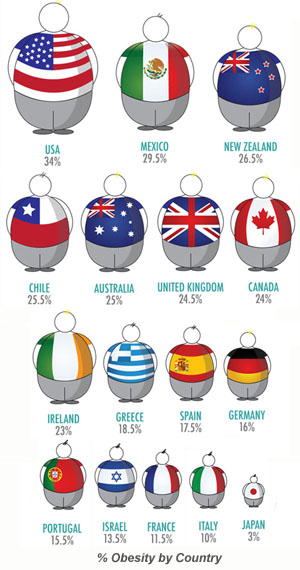
A person is regarded as being obese if they are more than 20 per cent overweight. A healthy BMI stops at 25 and the obese range begins at 30. In Ireland, there are people being treated with BMI's above 50! The average weight per person - we are a couple of stone heavier than we were 30 years ago! This country has over 900,000 people who are obese - resulting in the deaths of nearly 6,000 people each year. The annual cost to the healthcare system - 3 billion euros and counting.

Professor Donal O'Shea is synonymous with the fight against obesity in Ireland and paints a dim picture of where this country is heading, ''Nationally we are losing the battle, we are not reacting to it, either personally or as a society. You only have to look to the States and see where they are, it's not a pretty vista ahead'' (see gif below).
Obesity is now recognised as a ‘global epidemic’ by the World Health Organization (National Taskforce on Obesity, 2005). Along with adults, children are affected by obesity and in Ireland alone it is estimated that 300,000 children are currently overweight or obese (NTO, 2005).

Prof. Donal O'Shea
''It's now unusual to be of normal weight. It's no longer a ticking time bomb - the bomb has exploded - we're at the bomb site'' (O'Shea, 2012).
The epidemic of childhood obesity has been highlighted as a major health concern for today’s youth. It was reported in 2005 that an estimated 20 million children worldwide under the age of 5 were obese (World Health Organisation). The suspected causes of obesity are complex and include environmental and heritable factors (Crothers, 2009), along with lifestyle choices (Centres for Disease Control and Prevention, 2010).
Research also suggests that genetic factors have a role in obesity. With more than 200 genes being linked as possible contributors to obesity, it is highly relevant to look at obesity from a biological point of view. It has been suggested that some people are just predisposed to become overweight, with the heritability of obesity being high (Hinney, 2010), and also the positive correlation between maternal pre-pregnancy obesity influencing early childhood obesity has  been highlighted (Salsberry & Reagan, 2005).

As the obesity number in Ireland nears 1 million, it is clear that we are a country in crisis.

Although research shows that some people with a family history of obesity may be more inclined to gain weight, the recent rapid increase in childhood obesity indicates that lifestyle and not genetic contributions is the primary cause (NTO, 2005).
There's more to life than sitting and eating in front of a television.
 
A lifestyle revolving around the consumption of energy dense foods and a decrease in physical activity creates an environment termed ‘obesogenic’ by the World Health Organization in 1998 (Health Service Executive, 2009). The lifestyle of this environment promotes people to eat too much and exercise too little, creating an energy imbalance which results in weight gain. With a report claiming that children in the United States spend on average 3 hours per day watching television (Committee on Public Communications, 2010), it is possible to see that technological factors could also have a role in promoting an inactive lifestyle. Sedentary behaviours like this are often coupled with eating at the same time (Crothers, 2009). Children spending more time watching television will thus result in less time to engage in physical activities and exercise.
 
The possibility of childhood obesity being determined by Socio Economic Status has been examined as an environmental factor (Stamatakis, 2010). The researchers stated that obesity affects both developed and developing countries alike, but in their study they found that childhood obesity among school children in England had stabilized in recent years, however children from low income households had not benefitted from this trend.

With some of the possible causes being outlined above, what are the health implications for those children affected? The answer is manifold. A result of being overweight can include a lower quality of life (CDC, 2010), an increase in a child’s risk of health problems including; Type-2 diabetes, heart disease, stroke and many types of cancer in later life as well as shortening overall life expectancy (Health Service Executive, 2011).

Regarding obesity in general, Prof. O'Shea remarks, ''With smoking you can point to the heart, point to the lungs, heart attacks, lung cancer and stroke. But with weight related diseases, it's everything; in the brain, your talking about depression, dementia, oesophageal cancer, pancreatic cancer, kidney cancer, heart disease, wear and tear on the hip and knees, right down to your big toe and gout. So everything is made worse by being overweight and it's all remedial''.

You move in a cycle of ups and downs - food adds to the ups and simultaneously creates the downs.
 
Obese children are often the target of stereotypes and discrimination, where being a member of a visibly stigmatised group makes it hard to avoid being prejudiced against. Obesity in childhood not only has health implications but also impacts on the child’s psychological well-being.

Over the last three decades our eating habits have changed dramatically, as the country has been flooded with takeaways, hot deli's and breakfast rolls. If you are any way susceptible to temptation, what hope have you? For many, fast food has become a staple.
 

How America's BMI average has increased ~ CDC
''Parents can't let their children drift the way society is encouraging them to drift'' (O'Shea, 2012). Restrictions on unhealthy food advertising has been suggested as one possible method to prevent children from being influenced by these high calorie foods (Udell & Mehta, 2008), while Carter (2002) suggests a balanced diet consisting of no more than 3 meals per day, fewer high calorie foods and the replacement of sugary drinks like soda, to water.

''Our physical education in schools has failed us . . . it should be focused on health and wellbeing, and sport and activity should only be one part'' (Prof. Niall Moynan, DCU).


'It doesn't matter how slow you go,
you're still lapping everybody on the couch'
Scientific evidence shows that physical activity (PA) helps to maintain a healthy body weight, with people between the ages of 5 to 17 being recommended to accumulate at least 60 minutes of moderate to vigorous intensity PA daily (World Health Organisation, 2011). Physical activity also contributes to the development of healthy bones, muscles and joints, a healthy cardiovascular system and neuromuscular awareness. These benefits demonstrate the role sports and exercise have for overweight children. But common sense also plays a role. Lucozade Sport is great, but to have a five-year-old child drinking 300 calories and only burning off 100 is defeating the purpose entirely.

The further you let yourself go, the longer of a battle it is to get back.
 
Others highlight behavioural changes to help treat obesity (Stewart, Chapple, Hughes, Poustie, & Reilly, 2008). The authors proposed that the use of behavioural change techniques can enhance the motivation of a child by increasing self-awareness of their lifestyle behaviours. Goal setting for changes in diet and physical activity levels, rewards for achieving such goals and the monitoring of diet and low mobile activities (e.g. viewing television), allows the child to monitor progress towards a healthier lifestyle.

''Once you get over a certain weight, people are getting more despairing - you start giving up, nothing is working and they almost give in to the inevitability of more weight gain. There is no magic solution'' (Ruth Yoder - Senior Psychologist at St. Colmcilles Hospital Weight Management Clinic).
 
Parents and caregivers have a responsibility to promote change in their children. They have an immediate impact on shaping their child’s early food environments, attitudes on nutritional information and eating behaviours such as appropriate portion sizes (Anzman, 2010).
 
The global epidemic of childhood obesity is a modern health concern. Research discussed above suggests that childhood obesity is multi-faceted and has numerous and complex variables. One research paper highlighted that some people are possibly just predisposed to be overweight (Hinney, 2010), but with such a rapid increase in those affected by childhood obesity, the lifestyle choices and environmental factors are the more relevant contributors to the problem. People living in a modern day ‘obesogenic’ environment that nurtures weight gain is a considerable problem. Eating too much food, more time spent on sedentary activities, and a lack of health benefitting physical activities like sport, all invariably lead to weight gain. With more unique research proposals on the causes of childhood obesity being related to  socio-economic status, it could be argued that this problem is more than just genetic or diet related.

''At the moment we have a situation where we are sleepwalking into a condition that is killing between 5000 - 6000 people in Ireland every year'' (O'Shea, 2012).
Along with the stigma of carrying excess bodyweight, the health implications of being obese are paramount. In Ireland, 25% of three-year-olds are either overweight or obese. ''The younger you put it on, the bigger you can go'' (O'Shea, 2012). Children should not have to start out life already one step behind in terms of their health.

There are however ways of combatting these problems. By limiting the exposure of certain food advertising (Udell & Mehta, 2008), changing children’s behaviours and cognitions towards their current lifestyle (Stewart, 2008), increasing their time spent with physical activity (WHO, 2011), some simple diet changes (Carter, 2002), and nutritional education from  their primary caregivers (Anzman, 2010), the children and young adults affected by this current epidemic can start to look at its causes as possibly preventable and start to lose weight while adding longevity to their futures.
_____________________________________________________________________________________________________________________

''We're dealing with the kids of 30 years ago, and we're dreading the kids of today in 30 years'' (O'Shea, 2012).